5 Spooky Website Mistakes Scaring Away Your Customers
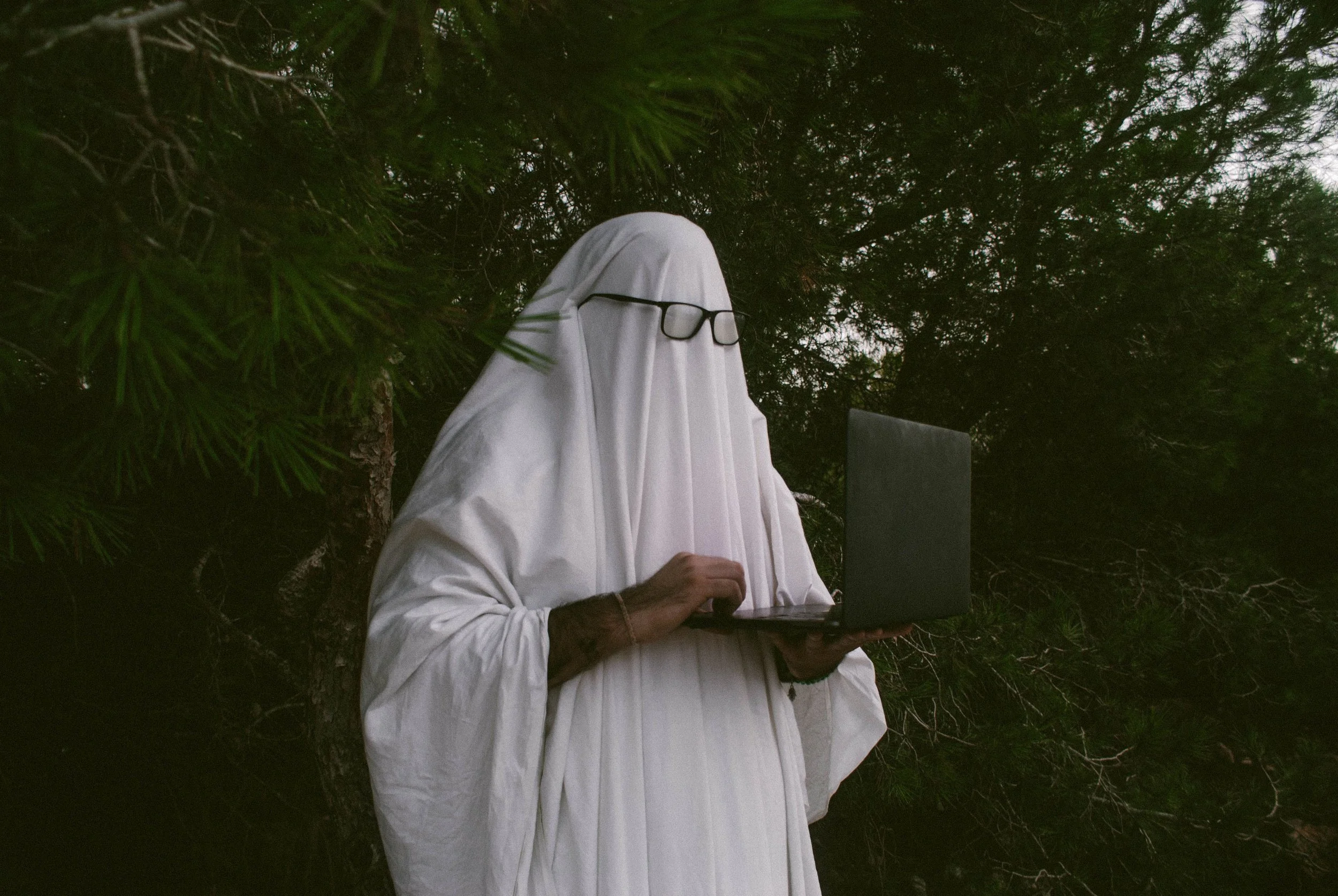
Halloween seemed like a fair excuse to round up a few genuinely scary website mistakes, the kind that make visitors leave before they ever see what you actually offer. These aren't invented for the occasion. Each one is backed by the same research we've referenced throughout the year, just dressed up a little for the season.
1. The "Not Secure" warning jump scare
Nothing sends a visitor running faster than their browser flashing a "Not Secure" warning before your site even loads. This happens when a site's SSL certificate has expired or was never set up correctly, and it's a genuinely trust-killing moment, most people don't stick around to find out if the rest of the site is fine. A managed platform like Squarespace handles SSL automatically for every site it hosts, specifically to prevent this exact scenario [1].
2. The ghost town of broken links
Dead links and 404 error pages are the website equivalent of an abandoned house, they signal nobody's been maintaining the place in a while. Beyond the bad impression, broken internal links actively work against how search engines understand and crawl a site's structure, which can drag down rankings over time, not just visitor trust [2].
3. The crawl that never ends (your load time)
A website that takes forever to load is its own kind of horror story. Research from Google and SOASTA found that bounce rate increases by 32 percent as load time goes from one second to three seconds, and by 123 percent by the time it hits ten seconds [3]. Most visitors won't wait around to see what's behind door number one if the door itself takes too long to open.
4. The design stuck in a time warp
An outdated design doesn't just look dated, it actively undermines trust before a visitor reads a single word. Stanford's Persuasive Technology Lab found that the single most frequently cited factor in whether people judge a website as credible is its overall design, layout, typography, and color scheme [4]. A site that looks like it was last updated years ago quietly tells visitors the business behind it might be too.
5. The uncanny valley of recycled stock photos
Generic stock photos, especially the kind a visitor has clearly seen on five other websites already, create a strange, slightly unsettling disconnect between what a site claims and what it actually shows. It's the same principle behind the Stanford credibility research: design and imagery aren't neutral decoration, they're part of what a visitor uses to decide whether a business feels real and trustworthy [4].
The treat: none of these require starting over
Every one of these is fixable without rebuilding a site from scratch. SSL gets handled automatically on a properly managed platform. Broken links can be found and fixed in an afternoon. Load time, design, and imagery are all things worth auditing honestly rather than assuming are fine.
If you want a second set of eyes on your own site before anything scarier than Halloween finds it, contact Abilene Code or call (325) 280-1390.
Contact page: https://abilenecode.com/contact
Resources
[1] Squarespace, Security
Official documentation on automatic SSL certificates and managed hosting
https://www.squarespace.com/security
[2] Google Search Central, SEO Starter Guide
Google's official documentation on site structure, links, and crawlability
https://developers.google.com/search/docs/fundamentals/seo-starter-guide
[3] Think with Google, Mobile Page Speed: New Industry Benchmarks
Google/SOASTA research on page load time and bounce rate
https://www.thinkwithgoogle.com/consumer-insights/consumer-trends/mobile-page-speed-new-industry-benchmarks/
[4] Stanford Web Credibility Research (Fogg et al., 2002)
Stanford Persuasive Technology Lab study on what drives website credibility
https://credibility.stanford.edu/pdf/Stanford-MakovskyWebCredStudy2002-prelim.pdf